

Universal Replacement
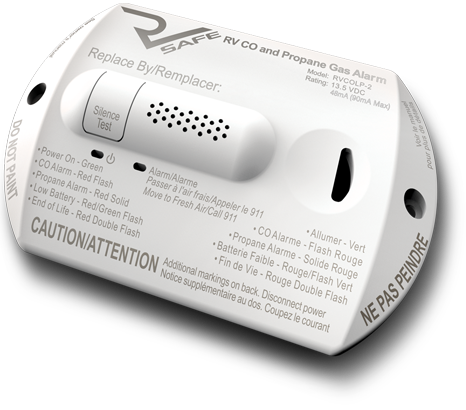
RV Safe alarms will keep the occupants of your RV and trailer well protected from CO and propane gas. Using the latest sensing technology and tested for harsh environments, the RV Safe is the premier alarm for all your camper and trailer needs.
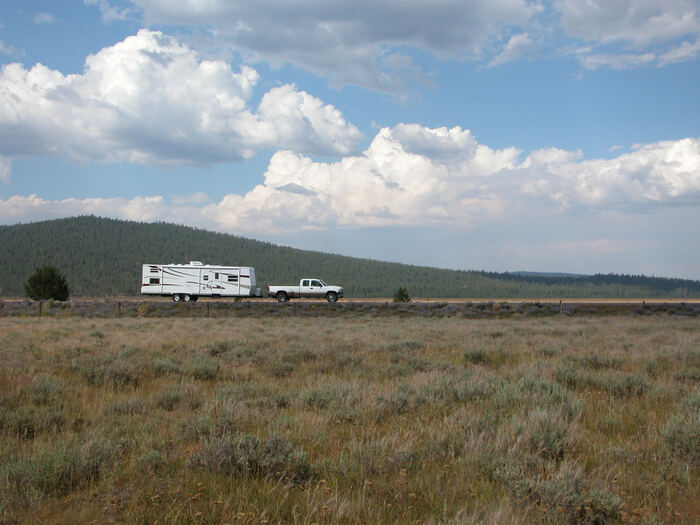
RVs, campers, trailers, and toy haulers — one alarm built to protect every kind of rig on the road.

Available in both black and white to best match your RV's interior, with a low-profile, barely-there footprint.
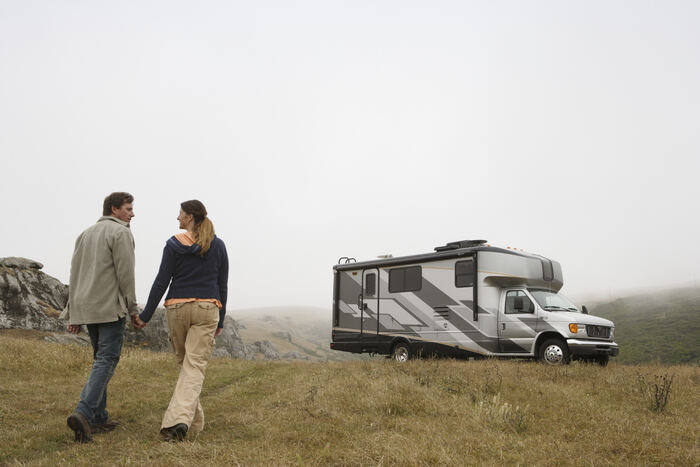
5-year sensor life and no maintenance required. Set it, mount it, and travel with confidence.
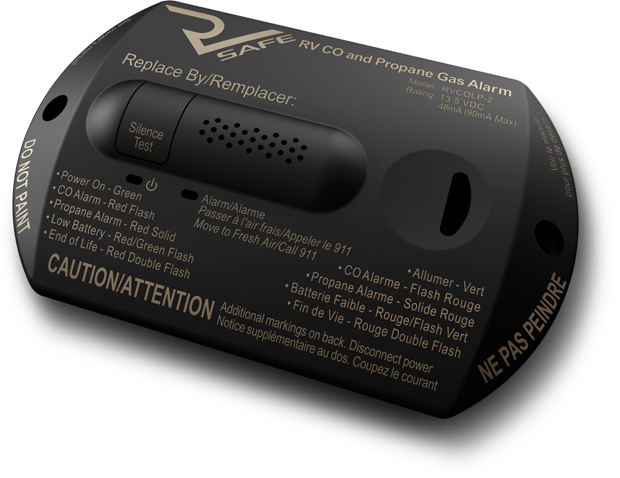
Our Alarm
Designed and tested with the rugged RV environment in mind — ideal for installation in all 12V RVs and trailers. Detects both Carbon Monoxide and Propane gas. ETL tested and listed, assembled in the USA.
Available at etrailer, Camping World, and PartsVia.
About Us
RV Safe LLC was founded in 2017 to fill the market's need for modern, high-quality RV gas detection. With more than 20 years in life-safety product development, RV Safe's founders created a device that is both beautiful and a state-of-the-art gas detecting alarm.
Support
The RV Safe must be connected to the RV's existing 12-volt battery system.
The alarm's red light will double flash and the horn will chirp once per minute. The alarm cannot be reset. However, power is required for the internal 5-year clock to trigger the end-of-life warning, so if your RV or trailer is often disconnected from power, this warning will not occur at the 5-year mark. The alarm must be replaced by the “REPLACE BY” date on the face of the alarm due to degradation of the internal sensors.
Yes, however it is possible that new holes will need to be drilled in order to mount the unit. One of the two RV Safe adapter brackets could also be necessary to adequately cover the existing cut-out. Please refer to the Product Selection Chart for help.
Yes. It will function installed in either direction.
Yes. The internal sensors that detect Propane or Carbon Monoxide (CO) can be easily damaged with chemicals and should be replaced. Clean the alarm with a dry cloth only — use no chemicals.
Yes. Vapors from certain products can damage it. Silicone-based products will damage the propane sensor — do not use anything with silicone near the alarm, including silicone caulking, glues, lubricants, and even some sunblocks and hair-care products. The damage is permanent. Other potentially harmful chemicals: acetone, alcohol, methanol, and sunblocks with silicone or alcohol.
No. The Test/Silence button verifies adequate voltage (12V), confirms the LED and horn work, and confirms the two internal gas sensors are connected — but it cannot confirm they are still sensitive to gas. To test: (1) Expose the alarm to propane gas for 30 seconds to confirm it activates, ensuring no source of flame, and vent your RV afterward. (2) CO gas cannot be simulated by the electronics; CO alarm test kits can be purchased online from various retailers.
Yes. The internal sensors degrade over time and the unit must be replaced to improve safety.
Yes. The alarm is rated to a MAXIMUM of 15Vdc. Any additional voltage can damage the input circuitry — replace the alarm. The same damage can occur with any incorrect connection, such as connecting to AC power.
No. RV Safe does not sell a compatible alarm to work with a control valve. Search the internet for an appropriate replacement.
The RV Safe CO/LP alarm with 3 wires has been discontinued due to very small sales volume. Its original purpose was to allow the alarm to be powered by two separate 12V battery systems (e.g. RV utility battery and engine start battery).
This is an error code. These codes are explained in the manual and on the front of the alarm. There is no reset for an error code — the alarm must be replaced.
(1) Look at your main control panel — some units display the battery voltage (12–14 VDC is normal). (2) Use a handheld voltmeter set to DC voltage and check at the alarm connection wires — Red is “+”, Black is “−”. (3) Set the meter to AC voltage and measure again. Any reading greater than 0.1VAC means the RV's power converter is bad and must be replaced.
No. When the sensor inside the RV Safe alarm has not been powered for several weeks, it may go into alarm mode as it “warms up.” It will reset itself after a few minutes. If the issue continues, contact customer service.
Your questions and feedback are important to us. Please feel free to reach out — we're here to help.